Process Engineering
Surface Finish Process Control and Environmental Compliance
Surface finish chemistry lines require continuous monitoring and precise control to produce consistent deposits across production lots. Each finish type has its own set of critical bath parameters, rinse requirements, and waste treatment processes.
Chemistry Bath Management
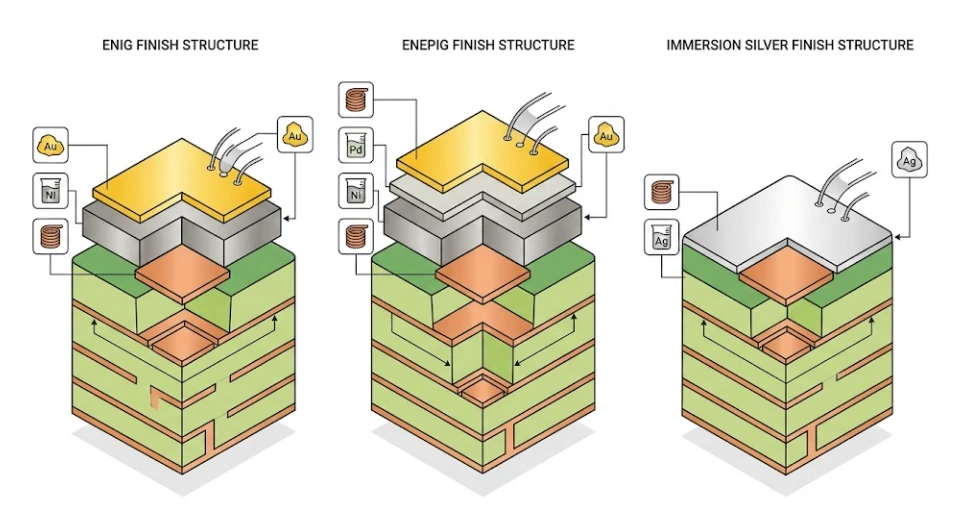
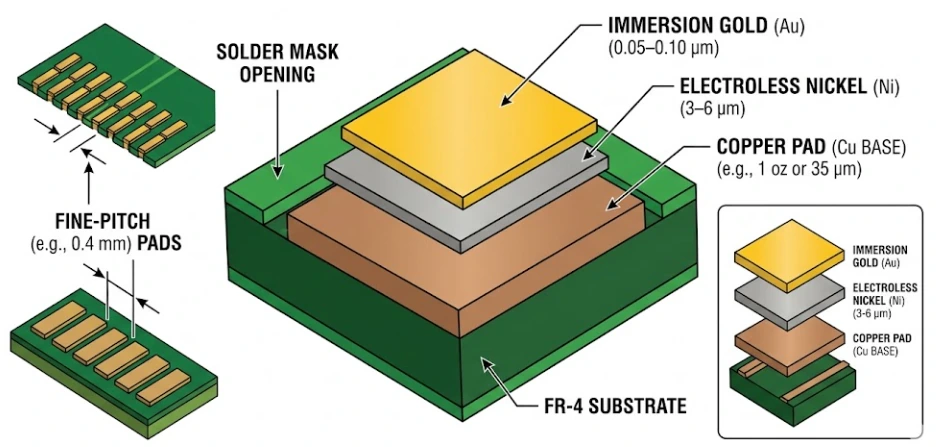
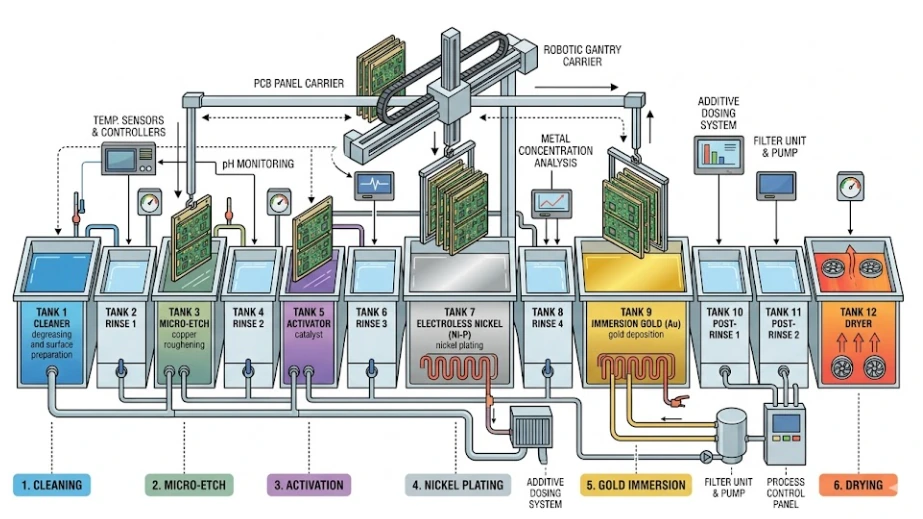
Electroless nickel baths used in ENIG and ENEPIG are the most process-sensitive chemistry in our finish lines. Bath loading, the ratio of surface area processed to bath volume, nickel metal concentration, reducing-agent level, pH, temperature, and stabilizer concentration must be maintained within tight ranges to produce consistent deposit quality. We use automatic dosing systems with real-time analytical monitoring, including titration for nickel content, pH measurement, and temperature control loops. Bath age is tracked in metal turn-overs, and baths are replaced at defined limits to prevent cumulative impurity build-up that degrades deposit quality.
Rinse Water Quality and Contamination Control
Between each process step, panels pass through multi-stage rinse cascades that remove chemical carry-over and prevent cross-contamination between process baths. Rinse water conductivity and pH are monitored to ensure effective cleaning. Contamination of downstream baths by upstream chemistry — for example, tin catalyst carry-over into the nickel bath — can cause deposit defects that are difficult to detect until assembly failure.
RoHS, REACH, and Environmental Compliance
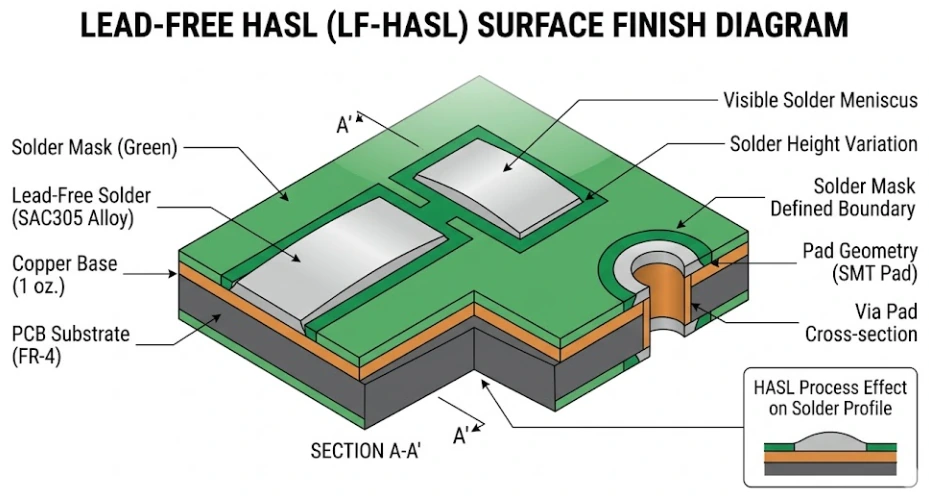
All surface finishes offered by APTPCB comply with RoHS (Restriction of Hazardous Substances) and REACH (Registration, Evaluation, Authorisation and Restriction of Chemicals) requirements. Lead-free HASL uses Sn-Ag-Cu alloy instead of traditional tin-lead. Chromium-free processes are used where applicable. Waste treatment systems process spent chemistry and rinse water to meet environmental discharge standards before release.
Storage and Handling After Finish Application
Finished boards are handled with anti-static gloves to prevent fingerprint contamination on pad surfaces. Boards are vacuum-packaged with desiccant and humidity indicator cards per IPC/JEDEC J-STD-033 for moisture-sensitive storage and shipment. Packaging is completed within controlled time windows after finish application — particularly important for OSP and immersion silver, which have shorter environmental exposure tolerances.