Materials

Spread-Glass FR-4 Stackups

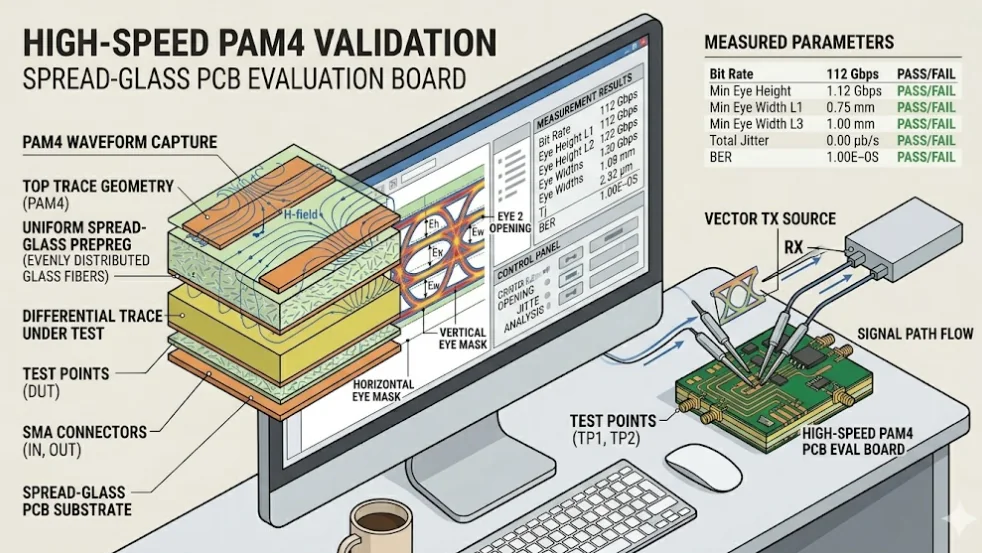
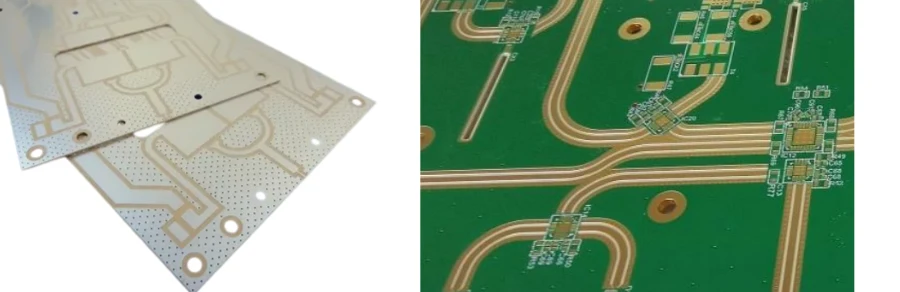
Spread-glass fabrics (1035, 1067, 2116, 3313, UTS) paired with VLP copper cut weave-induced skew and insertion loss enough to keep 10–28 Gbps channels in spec. We package the routing tactics, documentation prompts, and correlation workflow we use on RayPCB backplanes so SI teams can rely on the data.

Get an Instant Quote

Spread weave + angle routingSkew Control
VLP / HVLPCopper
Β±5% with couponsImpedance
Glass style per layerDocs
TDR + VNA overlaysValidation

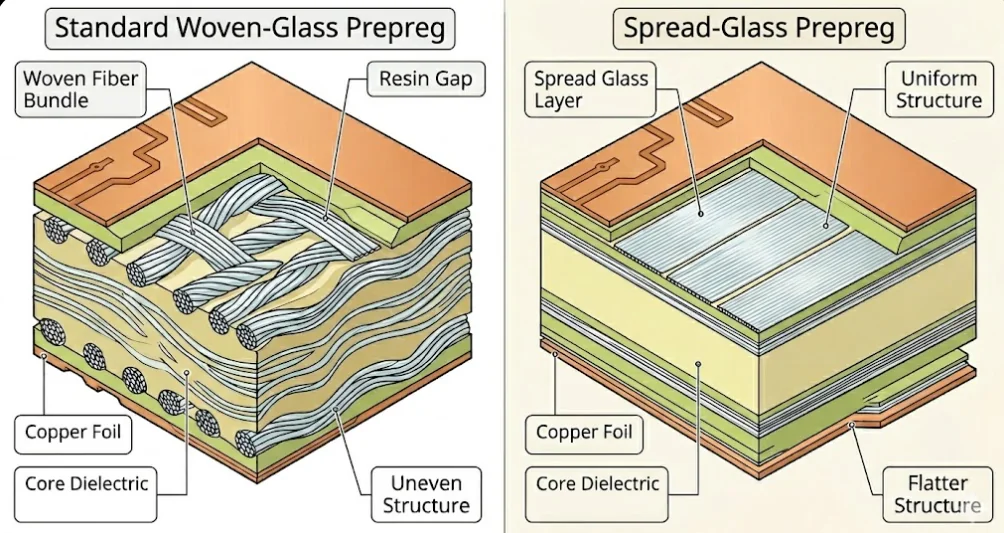
Why Use Spread-Glass FR-4

Differential Skew Mitigation

Uniformized glass removes large resin windows, keeping skew ≀5 mil across 10 in routes and easing COM budgets.

  • Less phase conversion to common mode
  • Allows longer straight routing
  • Reduces need for serpentine compensation

Predictable Dielectric Fields

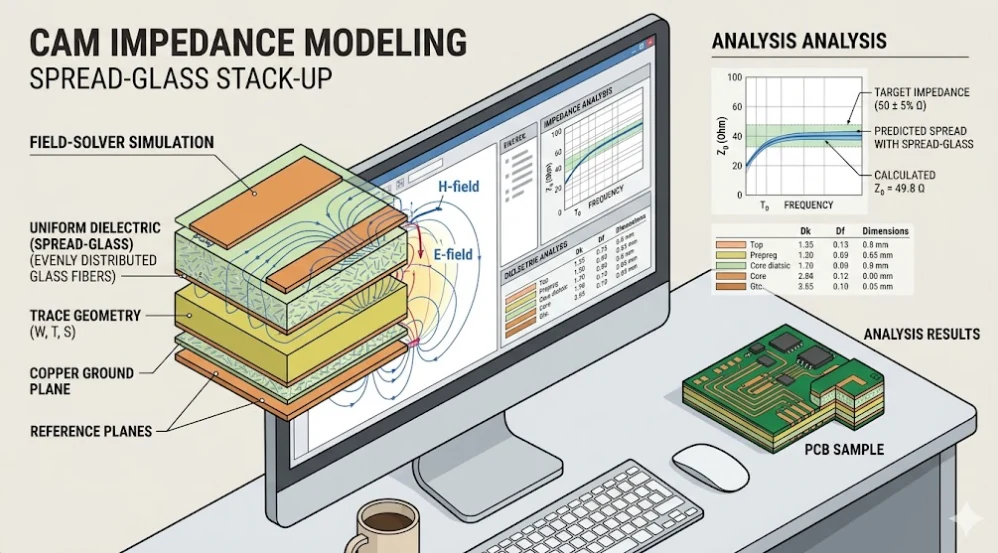
Spread weaves hold Dk constant so solver results track TDR coupons within Β±5% without over-guardbanding.

  • Better alignment with field solvers
  • Layer-to-layer uniformity
  • Improved impedance stability

Lower Effective Loss

Spread fabrics plus VLP copper reduce high-frequency loss 3–5%, buying extra reach on 10–28 G lanes.

  • Smoother current distribution
  • Less local impedance bumping
  • Better eye height in equalized links

Spread-Glass Fabrics We Specify

StyleConstructionUse Case
1035 / 1067Spread 1 oz warp/weftOuter signal layers and stripline pairs
2116 / 3313Dual-ply spreadCore layers balancing stiffness & skew
Spread 7628Macro spread heavy weaveBackplane cores needing rigidity
Ultra-Thin Spread (UTS)Custom microspreadPremium skew-critical lanes
Spread Hybrid StackMix of spread and standardCost-optimized builds

Representative Dielectric Data

Material SetDielectric ConstantDissipation FactorNotes
FR408HR + 1035 spread3.660.009Skew ≀5 mil with VLP copper
Megtron 6 + 1067 spread3.400.0020Used on 56 G lanes
Low-loss FR-4 + 2116 spread3.550.004Mid-loss builds
EM-826 + 3313 spread3.480.003Long reach 28 Gbps
Hybrid (spread outer / std inner)Layer-dependent-Cost-optimized approach

Values depend on resin and copper selection; reference laminate datasheets and lot certs for final solver inputs.

Spread-Glass Stackup References

12-Layer FR408HR 25 G Card

Spread 1035 outers and 2116 cores supporting PCIe Gen4/5 lanes.

  • Layer-by-layer glass/foil callouts
  • Backdrill residual <10 mil
  • Coupon IDs etched per panel

18-Layer Backplane Mix

Spread 3313 core pairs for long differential runs, standard glass for planes.

  • Routing angle map for critical nets
  • Copper balance instructions
  • COM/eye correlation pack

Hybrid Spread + PTFE

Spread-glass FR-4 digital sections tied to PTFE RF layers.

  • Bondply and press windows logged
  • Transition keep-out diagrams
  • VNA/TDR overlay included

Controls for Spread-Glass Builds

Glass Documentation

Traveler lists style, supplier, and acceptable alternates per dielectric.

  • Glass style etched in stack table
  • Alternate approval workflow
  • Traveler photo of lot labels

Routing Angles

We publish recommended routing angles or zig-zag patterns when spread is unavailable on specific layers.

  • Angle guidance per layer
  • Meander allowances in CAD rules
  • Layout review checklist

Copper Roughness

Pair spread fabrics with VLP/HVLP copper and log Ra/Rz + micro-etch depth.

  • Profilometer measurements
  • Micro-etch SPC Β±0.2 Β΅m
  • Huray parameters shared

Correlation Testing

TDR/VNA coupons placed on the same fabric orientation as product traces.

  • Coupon rotation matches board
  • Β±5% impedance acceptance
  • Insertion loss overlays stored

Application Snapshots

PCIe Gen5/6 Add-In Cards

Spread-glass FR-4 reduces skew on 16–32 GT/s differential pairs.

  • Line matching Β±1 mil
  • VLP copper usage logged
  • TDR coupon overlay

High-Speed Backplanes

18–30 layer backplanes with spread cores for 25–56 G lanes.

  • Routing angle plan included
  • Backdrill plan documented
  • COM templates delivered

Telecom/5G Cards

Hybrid FR-4 + RF designs where spread glass keeps digital skew in check.

  • Hybrid layer map
  • Bondply and press notes
  • Field-service coupon support

Spread-Glass Selection Prompts

Inputs needed before we lock spread-glass choices.

Skew Budget

Define allowable skew per channel to decide if full spread or mixed weave is required.

  • Lane length
  • Skew tolerance

Material Mix

Choose resin system (FR408HR, Megtron, low-loss FR-4) and spread style per layer.

  • Resin selection
  • Glass style priority list

Validation

Plan coupon placement, TDR/VNA scope, and solver correlation artifacts.

  • Coupon orientation
  • Required reports

Spread-Glass FAQ

Can you guarantee a specific glass style on every layer?

Yes, when specified in the stack table. We lock glass styles per layer and document approved alternates to avoid substitutions.

Do spread fabrics increase cost or lead time?

Cost impact is modest (β‰ˆ3–5% per layer). We stock common spread styles and can pull specialty rolls within 1–2 weeks.

How do you prove skew performance?

We route skew test coupons alongside product nets, measure skew with TDR/VNA, and share overlays with solver predictions.