
12–48h Fabrication • 72h Assembly • ±5% Impedance

Quick-Turn PCB Prototyping

Dedicated quick-turn lanes build 2–6 layer FR-4 in 12–48 hours and HDI up to 10 layers inside 72-hour windows. You still get Class 2/3 workmanship, 24-hour DFM feedback, and optional turnkey assembly so EVT hardware behaves like production.

Get an Instant Quote

Full Quote →
24 h feedbackDFM
±5% couponImpedance
0.2 in – 15×20 inPanel Size
1–10,000 pcsOrder Size
SMT 0201 / 0.3 mmAssembly

Quick Turn PCB Coverage for Every Board Type

Our quick turn PCB services are built for teams that need many different PCB technologies manufactured and assembled fast by a single, reliable partner. On one platform, we can quickly produce and assemble standard FR4 PCBs, multilayer and HDI boards, flex and rigid-flex PCBs, ceramic PCBs, aluminum PCBs and MCPCBs, high-frequency/RF PCBs, high-speed digital boards, and heavy-copper power PCBs.
Whether your project combines an HDI logic board, a flex interconnect, a rigid-flex system board, a ceramic power module, or an aluminum LED board, we can handle them in parallel under the same quick turn PCB workflow. That means fewer suppliers to manage, faster ECO cycles, and synchronized delivery of all your board types—ready for assembly, testing, and integration.

Quick Turn PCB Manufacturing Capabilities

Our quick turn PCB manufacturing lines are built around concrete, production-proven capabilities rather than just a list of board names. We support tight trace/space, precise drilling, controlled impedance, and advanced via structures across FR4, HDI, flex, rigid-flex, ceramic, aluminum, MCPCB, RF, and high-speed digital PCBs—so your quick turn boards are both fast and production-ready.
We can manufacture a wide range of PCB types under quick turn conditions, including but not limited to Standard FR4, Multilayer, HDI, Flex, Rigid-Flex, Ceramic, and Metal Core PCBs.
  • Tight 3/3 mil trace/space with controlled impedance coupons
  • Sequential lamination for HDI + fast via-in-pad turnaround
  • Flex, rigid-flex, ceramic, MCPCB, and RF builds under one program
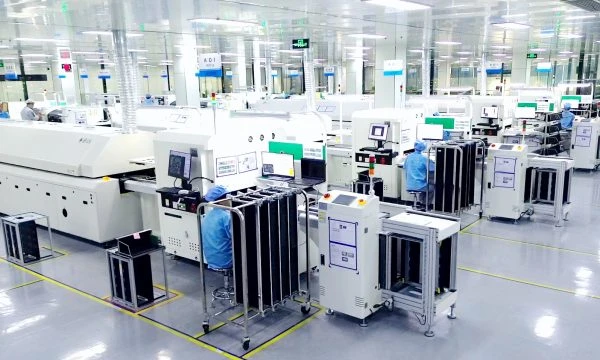
Advanced PCB Manufacturing Line

Prototype Through Pilot Production

Quick turn PCB services are not only for early-stage prototypes. Many customers rely on quick turn production for pilot runs, small-batch builds, and low-volume manufacturing when demand is uncertain or when product lifecycles are short. We structure our quick turn offering to support the entire journey:

The Quick Turn Journey

  1. 1

    Concept Proof

    Very small quantities (e.g., 5–20 pieces) for design validation, signal integrity checks, and initial functional tests. Lead time: 24-48 hours for FR4.

  2. 2

    Design Verification

    Medium quantities to verify manufacturability, test coverage, and reliability before committing to large-scale production. Lead time: 3-7 days for complex boards.

  3. 3

    Pilot Production

    Dozens to hundreds of boards for early customer shipments, field tests, or niche products. Seamless transition from prototype lines.

Throughout the process, we perform automated optical inspection (AOI), X-ray inspection for hidden solder joints, and optional in-circuit or functional testing based on your requirements. By combining fabrication and assembly in one integrated quick turn PCB solution, we minimize handoff delays, avoid data translation errors between multiple suppliers, and deliver fully assembled boards on a compressed schedule—ready for lab validation, field testing, or direct integration into your systems.

Engineering Support, DFM/DFT, and Quality Control

Because quick turn PCB projects operate under time pressure, it is even more important to catch manufacturability issues early and maintain strict process control. Our engineering team is deeply involved at every stage of the quick turn PCB workflow to ensure high yield and repeatable quality across all supported PCB types.
Key elements of our engineering and quality framework include:
  • Front-end engineering review (DFM/DFT) – We analyze your Gerbers/ODB++, stack-up data, and BOM to detect potential issues such as insufficient clearances, problematic via structures, solder mask slivers, thermal imbalances, or test access limitations.
  • Stack-up and material recommendations – For HDI, high-frequency, high-speed digital, ceramic, and metal core quick turn PCBs, we advise on layer structures, dielectric choices, and copper weights that balance performance, cost, and manufacturability.
  • Impedance and signal integrity considerations – For RF and high-speed quick turn PCBs, we help ensure that line widths, spacing, and reference planes are compatible with the specified impedance and material properties.
  • Process control and inspection – AOI for bare boards and assembled PCBs, electrical testing of PCBs where required, X-ray inspection for BGA and LGA packages, and adherence to recognized IPC class and customer-specific requirements.
  • Feedback loop for continuous improvement – Issues found during assembly or testing are fed back to design and process engineering, so subsequent quick turn PCB runs and future mass production benefit from proven design and process optimizations.
This engineering-centric approach gives you confidence that even complex quick turn ceramic PCBs, HDI boards, rigid-flex designs, RF/microwave PCBs, or heavy-copper power boards will be manufactured and assembled reliably—despite the short lead times.

Long-Term Manufacturing Strategy

Quick turn PCB fabrication and assembly are not isolated services; they are a key part of a broader manufacturing strategy that must support your product over its entire lifecycle. We structure our offering so that the same engineering expertise, material options, and process controls used for quick turn projects can be extended to repeat orders, long-term low-volume builds, and seamless transition to mass production.
For startups, this means you can validate your design, secure early customers, and then scale without changing suppliers or re-qualifying critical PCB types such as HDI, flex, rigid-flex, ceramic, or MCPCB. For established OEMs, our quick turn PCB service acts as a high-speed innovation lane that runs alongside your regular production lines—ideal for redesigns, derivative products, and urgent engineering changes.
We support:
  • Multiple PCB technologies under one roof, so your engineering team does not need to manage different vendors for FR4, HDI, ceramic, flex, RF, high-speed, and metal core boards.
  • Consistent documentation and traceability, making it easier to maintain quality records, perform audits, and meet regulatory requirements in markets such as automotive, industrial, medical, and telecommunications.
  • Flexible logistics and scheduling, with options for expedited shipping, split deliveries, and synchronized shipments of PCBs, components, and assembled boards.
By partnering with us, you gain a single, integrated quick turn PCB solution that covers nearly all major PCB types—from simple FR4 prototypes to advanced HDI, rigid-flex, ceramic, RF, high-speed digital, and high-power boards—designed, produced, and assembled quickly and professionally, with a clear path toward long-term, repeatable manufacturing.

Ready for a 12–48 Hour Build?

Upload files and our engineering team will return DFM notes, stackup guidance, and a confirmed ship date.

Frequently Asked Questions

Answers to the questions we hear most from hardware teams.

How fast can fabrication complete?

Double-sided FR-4 ships in 12–24 h; 4–6 layer stackups run in about 48 h when data and materials are approved.

What about assembly lead time?

Kitted or partial-turnkey SMT can finish in as little as 3–4 days, with 72-hour expedite lanes for critical programs.

What files are required?

Gerber or ODB++, drill files, stackup notes, quantity, target lead time, plus BOM and centroid/XY data for assembly.

Can you run controlled impedance?

Yes—provide target values and tolerance; we will model the stackup, build coupons, and TDR them with ±5% acceptance.

Do you support turn-key assembly?

Yes—BOM sourcing, consigned kits, and mixed-supply options are available for prototype runs.