
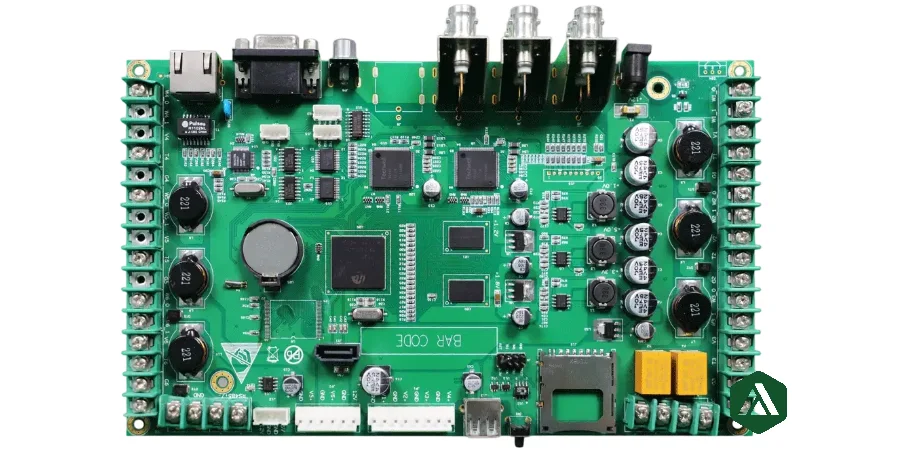
- An assembly BOM should be treated as a build-input control document, not only as a shopping list.
- The most useful review boundary is to separate line-item identity, approved alternate control, DNP status, revision ownership, and sourcing posture.
- A board can have Gerbers and placement data ready and still stall if the BOM is ambiguous about part identity, package intent, or substitute approval.
- Assembly BOM best practices should explain what the BOM must define before RFQ, first build, or release, and avoid turning the topic into generic supply-chain marketing.
Quick Answer Assembly BOM best practices start with one rule: every populated line should be identifiable, reviewable, and aligned with the intended assembly package. That means clear manufacturer part identity where needed, controlled alternates, explicit DNP or DNI handling, revision alignment, and a sourcing posture that does not force the factory to guess. The BOM matters most when it stays connected to the assembly drawing, placement data, and downstream inspection or test plan.
For the broader release-readiness view that connects BOM control, assembly-package clarity, inspection layers, and shipment gates, start with the PCBA Assembly Test and Quality Guide.
Table of Contents
- What should engineers review first?
- What counts as an assembly BOM here?
- Which BOM gaps create the first manufacturing hold?
- How should the BOM stay aligned with the rest of the assembly package?
- What should be frozen before RFQ, first build, or release?
- Next steps with APTPCB
- FAQ
- Public references
- Author and review information
What should engineers review first?
Start with part identity, alternate governance, DNP control, revision alignment, and sourcing boundary.
That order matters because the BOM is often the first document that determines whether the assembly package is stable enough to enter review. If those five areas are weak, later steps such as FAI, AOI, ICT, flying probe, or final inspection are forced to spend time diagnosing input ambiguity instead of real build defects.
The first engineering questions are usually:
- Does each populated line identify the intended part clearly enough for sourcing and assembly review?
- Are approved alternates explicit, or does the factory have to ask what may be substituted?
- Are DNP or DNI items controlled clearly enough to prevent accidental loading?
- Does the BOM revision match the assembly drawing and placement data revision being released?
- Is the sourcing posture turnkey, consigned, or mixed, and is that boundary visible in the package?
| Review boundary | What it answers | What it does not prove |
|---|---|---|
| Part identity | Whether the intended component can be recognized and reviewed | That the rest of the assembly package is complete |
| Alternate governance | Whether substitute usage is controlled instead of improvised | That all alternates are equally suitable in every circuit context |
| DNP control | Whether the build population is defined clearly | That the centroid file or assembly drawing reflects the same status |
| Revision alignment | Whether the released documents point to the same build intent | That first-build setup is already validated |
| Sourcing posture | Whether procurement responsibility is clear | That component availability risk is fully removed |
What counts as an assembly BOM here?
Here, assembly BOM best practices means the board-level component definition layer inside the PCBA release package.
That includes:
- line-item identity for the intended population
- controlled use of manufacturer part numbers or equivalent approved identification
- approved alternates where the design allows them
- explicit DNP or DNI handling
- quantity, reference-designator, and package consistency
- revision ownership and handoff clarity
- sourcing posture for turnkey, consigned, or mixed builds
It does not mean:
- the BOM alone defines placement orientation
- the BOM alone replaces the assembly drawing
- the BOM alone proves test readiness
- the BOM alone closes inspection or shipment release
That boundary matters because many weak BOM articles describe the file as if it solves sourcing, assembly, and quality by itself. It does not.
The safer explanation is:
the BOM defines what the board should be populated with, but it still depends on the rest of the assembly package to define how that population should be built, inspected, and released.
Which BOM gaps create the first manufacturing hold?
The first manufacturing hold usually appears when the BOM leaves identity or decision ownership unclear.
1. Unclear part identity
The most common problem is not that the file is missing entirely. It is that the line item exists but does not identify the intended part cleanly enough.
That often looks like:
- a generic description without controlled part identity
- value and package language that do not match the intended footprint
- reference-designator grouping that becomes difficult to audit
- different naming conventions across BOM, drawing, and placement data
One of the ugliest factory-floor versions is the missing packaging suffix. An engineer lists only the base MPN, for example STM32F103C8T6, and leaves out the packaging suffix that defines how the part must be supplied to the SMT line. Purchasing then saves a few cents by buying tray, tube, or even bulk stock instead of the required tape-and-reel version. The mistake stays invisible until the material reaches a high-speed line running near 100,000 CPH. At that point the feeder cannot load the parts at all. The line does not slow down gracefully. It stops. A job that was supposed to finish in 12 hours turns into Catastrophic Line Down while the team waits for custom repacking, tray handling workarounds, or an emergency re-buy of reel-packed material. That one missing suffix letter is not clerical noise. It is a machine instruction failure that can destroy lead time and trigger expensive downtime penalties on a multi-million-dollar SMT asset.
2. Alternate control that is too loose or too vague
Alternates can reduce sourcing friction, but only when the design intent is clear.
If the BOM does not show whether alternates are:
- approved
- restricted to certain lines
- subject to engineering confirmation
then the release package creates an avoidable query loop.
3. DNP or DNI status that is not explicit
Variant builds often fail early when the package does not state clearly which parts should remain unpopulated.
The issue is not only cost or purchasing confusion. It also affects:
- pick-and-place programming
- first-article review
- AOI expectations
- functional-test interpretation
4. Revision drift across files
A BOM can look complete and still be unsafe if it belongs to a different release state than the assembly drawing or centroid file.
That kind of drift usually creates questions around:
- population differences
- alternate status changes
- polarity-note changes
- mixed-process notes no longer matching the loaded parts
5. Sourcing posture that is implied instead of declared
The sourcing model changes how the BOM is used.
| BOM issue | Why it creates a hold | What should be clarified |
|---|---|---|
| Loose part identity | Reviewers cannot confirm the intended component set cleanly | Which identifier controls the line |
| Undefined alternates | Procurement cannot tell what may be substituted safely | Alternate approval boundary |
| Unclear DNP status | The loaded population can drift from the intended variant | Population status by line |
| Revision mismatch | Different files may describe different build states | Release revision ownership |
| Hidden sourcing model | Responsibility for procurement and substitution stays ambiguous | Turnkey, consigned, or mixed posture |
A common release-package failure chain is small on paper but expensive on the floor: a mixed BOM carries an unapproved substitute, the approved vendor boundary is not visible, and the placement file still reflects the older rotation or population assumption. Setup proceeds because the package looks mostly complete, feeders are loaded, and the first-build halt-and-verify step is reduced to a weak signoff. The line then repeats the same wrong part or orientation assumption across the lot until AOI, ICT, power-on debug, or customer review catches the drift too late. At that point the team is no longer discussing a clean BOM. It is dealing with batch rework, scrap exposure, and release delay that started from one uncontrolled identity field.
Related reading:
How should the BOM stay aligned with the rest of the assembly package?
The BOM works best when it stays in its own lane and still aligns with the other release artifacts.
The BOM does not replace assembly-definition documents
The BOM should not absorb responsibilities that belong to:
- the assembly drawing
- the centroid or pick-and-place file
- the test-planning package
- the inspection and release plan
Those artifacts answer different questions.
| Package artifact | What it mainly owns | What it should not be confused with |
|---|---|---|
| BOM | What components belong on the board | Placement orientation or process routing by itself |
| Assembly drawing | How the build intent should be interpreted by humans and setup teams | The whole sourcing definition |
| Placement data | Machine-readable placement coordinates and rotation context | Population approval or test scope |
| Test plan | What electrical or functional evidence is expected | Component identity control |
That separation is why BOM cleanup and drawing cleanup usually need to happen together.
If the board package is being tightened before release, review these in sequence:
- the BOM for line-item identity and alternate control
- the assembly drawing for polarity, population, and process-definition clarity
- the placement data for machine-readable consistency
- the quality path for FAI, inspection, and electrical-test expectations
Useful companion pages:
- Assembly Drawing Essentials
- Design for Assembly Checklist
- Testing & Quality
- First Article Inspection
What should be frozen before RFQ, first build, or release?
Before serious RFQ, first build, or release, freeze:
- the BOM revision that owns the intended population
- the line-item identity and alternate boundary for each controlled part family
- the DNP or DNI status for all non-populated lines
- the sourcing posture, including turnkey, consigned, or mixed responsibility
- the alignment between BOM, assembly drawing, placement data, and quality-review package
If those items are still moving, the board may still be reviewable, but the release package is not yet stable enough to behave like a clean production input set.
Next steps with APTPCB
If you are about to release a high-value PCBA order and the BOM still contains mixed sourcing posture, ambiguous MPN identity, package mismatch risk, or weak control over approved alternates and polarity-sensitive substitutions, do not treat that file as a paperwork detail. This is exactly where an apparently complete release package turns into feeder mismatch, wrong-population setup, line stoppage, or batch rework after the SMT program has already committed to the wrong baseline.
Send the full MPN-controlled BOM, DNP status, Gerber, and XY placement data to sales@aptpcb.com or upload the package through the quote page.
APTPCB's NPI and supply-chain engineering team will return a BOM Completeness & Assembly Alignment Review within 24 hours. We will check packaging suffix conflicts, verify whether approved alternates actually match the intended package and polarity boundary, and expose the BOM fields most likely to trigger machine downtime or build drift before the SMT line starts consuming expensive assembly hours.
If you need to go deeper before release, review:
FAQ
Is an assembly BOM only a purchasing list?
No. It is part of the controlled assembly input package. It helps define what should be populated, how alternates are governed, and how the build population is reviewed before release.
Should every BOM lock every line to one exact source?
Not always. The safer rule is to control alternates intentionally. Some lines may allow approved substitutes, while others need tighter identity control.
Why do DNP or DNI lines matter so much?
Because they affect not only procurement, but also placement programming, first-article inspection, AOI expectations, and variant control.
Can a clean BOM replace the assembly drawing?
No. The BOM defines component identity and population intent. The assembly drawing still owns build-interpretation details such as polarity, process notes, and special handling visibility.
What is the most common BOM mistake before first build?
Releasing a file that looks complete, but is not aligned with the assembly drawing, centroid data, or sourcing boundary for the actual build revision.
Public references
APTPCB Components BOM Supports BOM structure and component-planning context for assembly handoff.
APTPCB Component Sourcing Supports sourcing posture, authenticity review, lifecycle review, and BOM-linked procurement framing.
APTPCB Testing & Quality Supports the broader quality path where BOM control stays separate from inspection and test ownership.
APTPCB First Article Inspection Supports first-run verification and NPI release-gate framing after the input package is prepared.
PCBA Assembly Test and Quality Guide Supports the layered release-readiness model that places BOM control upstream of inspection and electrical verification.
Author and review information
- Author: APTPCB PCBA release-readiness content team
- Technical review: BOM control, sourcing, and NPI package review team
- Last updated: 2026-05-13